
1. What inspired you to explore coaching or training, and what does this journey mean to you personally at this stage of your life?
During my teaching career, while I was actively involved in training and conducting
workshops, I consistently received feedback encouraging me to pursue this path full-
time. However, the real nudge came from a deeper realisation that the true essence of
learning was missing within the conventional education system. I began questioning
why meaningful learning and self-awareness should be restricted to just one
institution or a limited setup.
Over time, this curiosity naturally led me towards my training journey. The spark for
coaching, in particular, was recognised and encouraged by my mentors. I found
myself repeatedly standing at intersections where I could clearly see how beautifully
coaching could be amalgamated with training, where learning was not just about
knowledge transfer, but about awareness, responsibility, and inner transformation.
At this stage of my life, this journey feels like an inner pull rather than a calculated
decision. What I do today feels deeply aligned with who I am becoming. There is a
sense of clarity and congruence in my choices, and that alignment gives this journey
its deepest meaning.
2. How do you currently define yourself-as a professional, a learner, and a future coach
or trainer?
I see myself first as a learner, someone deeply committed to self-awareness and inner
evolution. That remains my foundation. Professionally, I work as both a trainer and a
coach. As a trainer, I strongly believe that learning must move beyond concepts and
translate into lived experience, reflection, and real behavioural shifts.
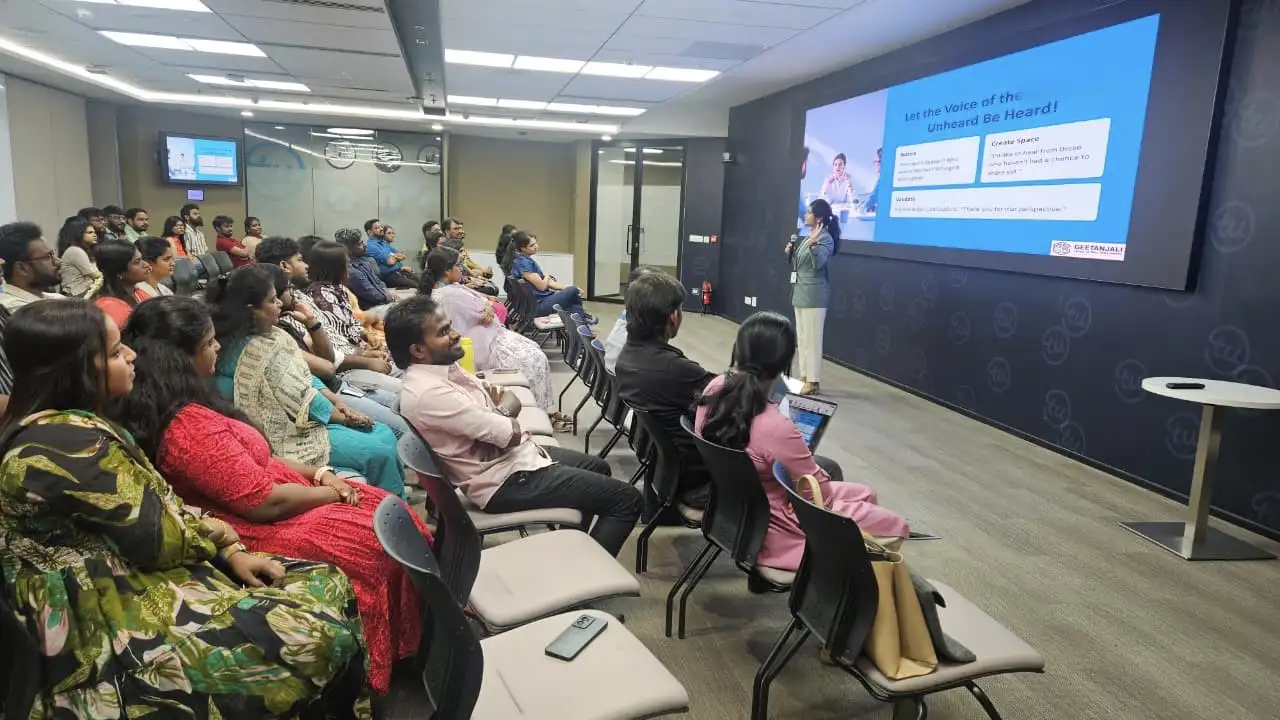
As a coach, I see my role as a facilitator of clarity rather than a fixer. I focus on
holding space, asking powerful questions, and enabling individuals to tap into their
own internal resources and wisdom. This blended role allows me to integrate structure
with presence, and tools with awareness, making my work both grounded and
transformative.
3. What beliefs or mindset shifts have most influenced your decision to step into the coaching or training space?
One of the strongest beliefs that shaped my decision was the recurring inner knowing
that I am meant for a higher purpose and a larger impact. When that awareness
becomes consistent, you naturally begin to expand yourself, your thinking, your
capacity, and your responsibility. Staying confined to smaller roles no longer feels
enough.
Another important shift was understanding the kind of impact training can truly
create. I began to see that training is not just about delivering content or skills; it has
the power to influence mindsets, behaviours, and choices. With that power comes
responsibility because whatever is facilitated in a training or coaching space can leave
a lasting imprint on a person’s thinking.
This realisation made me more conscious and intentional about my role. It shifted my
focus from “teaching” to facilitating transformation. Knowing that the work I do can
create awareness, ownership, and long-term change deeply influenced my decision to
step into this space with sincerity and integrity.
4. When you think about your future as a coach or trainer, what kind of impact do you
want to create, even if it still feels evolving?
When I think about the future, the impact I want to create is rooted in awareness and
responsibility. Even though the form of my work may continue to evolve, the essence
remains the same: to help individuals and groups become more conscious of their
patterns, choices, and inner drivers.
I want the impact to go beyond short-term motivation or inspiration. For me,
meaningful impact is when people begin to think differently, respond more
consciously, and take ownership of their growth, both personally and professionally. If
my work can initiate that shift, even subtly, it has served its purpose.
At the same time, I allow this vision to evolve. I don’t feel the need to rigidly define
outcomes. I trust that as I grow, learn, and deepen my practice, the impact I create will
naturally expand in depth and reach.
5. What does “success” mean to you right now, beyond money or titles?
Success, for me, is inner stability and integrity. It’s being able to stand by my values,
remain grounded in challenging situations, and continue growing without losing
myself. If my work genuinely adds value to people’s lives and I remain connected to
my inner compass, I consider that success.
6. How aware are you of your own strengths, blind spots, and growth areas as a beginner in this profession?
With over eight years of combined experience across teaching, training, coaching, and
mentoring, this journey has made me increasingly aware of my strengths, while also
deepening my sensitivity towards my blind spots and growth areas. Over time, I’ve
realised that awareness is not static; it continues to evolve with experience and intent.
My yogic practices strongly support this process by helping me stay observant of my
inner state and responses. Regular introspection and self-reflection allow me to pause,
review, and recalibrate my approach. Periodic guidance and perspectives from
mentors also offer valuable external reference points, helping me reflect more deeply
and stay aligned.
Together, these elements help me grow with humility, clarity, and responsibility, both
personally and professionally.
7. What inner challenges-such as self-doubt, confidence, or consistency-are you consciously working on?
Like any evolving professional, I continue to work on inner challenges that surface at
different stages of growth. For me, it is less about self-doubt and more about refining
self-trust, especially while stepping into larger responsibilities and expanding my
impact.
I consciously work on staying consistent without becoming rigid, and confident
without becoming complacent. This involves observing my internal dialogue,
managing expectations, both my own and others’, and responding thoughtfully rather
than reactively.
My yogic practices, along with regular introspection, help me remain anchored. They
allow me to notice these patterns early, work through them with awareness, and
continue growing without letting inner noise dictate my choices.
8. How do you currently invest in your own learning, self-development, and skill building?
I invest in my learning as an ongoing, intentional process rather than a one-time
effort. This includes structured training and certifications, continuous reading, and
staying engaged with evolving frameworks in coaching and training.
Equally important for me is inner work. My yogic practices, reflection, and self-
inquiry form the foundation of how I integrate what I learn. I also value supervision
and mentor feedback, as they help me gain perspective and refine my approach.
For me, learning is meaningful only when it is embodied, when it shapes how I show
up, listen, and facilitate, both in my work and in life.
9. What values or principles do you want your coaching or training practice to be known for in the long run?
The values I work with today: depth, integrity, and conscious responsibility, are the
same values I want my coaching and training practice to be known for in the long run.
For me, learning is not meant to be transactional; it is meant to create awareness that
outlives the session and continues to influence how individuals think, choose, and act.
I strive to create learning spaces where competence grows alongside self-awareness,
and where growth is approached with sincerity rather than urgency. This intention is
very much present in my work today, and I see it deepening as the practice evolves.
In the long run, I want this work to stand for something larger than methods or
personalities. If it contributes to creating more conscious individuals who lead,
decide, and relate with awareness and responsibility, then the purpose is being served.
10. How do you see your personal identity evolving as you grow from a learner into a professional coach or trainer?
I see myself as a lifelong learner first, regardless of the roles I step into. While my
professional identity as a coach and trainer continues to evolve, my relationship with
learning remains constant; it keeps me curious, grounded, and open.
As I grow, my identity feels less about labels and more about presence and awareness.
I notice a gradual shift from doing more to being more, to listening deeper,
responding consciously, and holding space with greater maturity. This evolution
allows me to integrate experience with humility and structure with sensitivity.
Over time, I see my personal identity becoming more spacious and less rigid, rooted
in awareness, yet adaptable. That, for me, is the natural evolution of both my learning
and my practice.
11. What does integrity and ethical practice mean to you, especially as someone just entering this field?
For me, integrity begins with intention and alignment. It is about being clear on why I
do this work and ensuring that how I show up is consistent with that intent. When
people place trust in a coaching or learning space, that trust carries responsibility.
Ethical practice means creating safe, respectful spaces, maintaining confidentiality,
and being mindful of the influence that comes with this role. It also involves knowing
when to facilitate, when to pause, and when to encourage additional support.
At its core, integrity is about congruence between my values, my presence, and my
practice.
12. How do you balance learning techniques and tools with developing presence, empathy, and self-awareness?
For me, techniques and tools are important, but they are secondary to presence. I see
tools as enablers, not drivers. What truly creates impact is how present, aware, and
attuned I am in the moment, with myself and with the person or group I am working
with.
I consciously focus on developing empathy and self-awareness through reflection and
inner practices, so that the tools I use are applied with sensitivity and context. When
presence leads, and techniques follow, the work remains authentic and responsive
rather than mechanical.
This balance allows learning to feel human, grounded, and meaningful, rather than
scripted.
13. What kind of support, environment, or mentorship do you believe will help you grow sustainably in this profession?
I believe sustainable growth comes from being part of an environment that values
reflection, honest and respectful conversations, and continuous learning. Being in
spaces where questions are encouraged, perspectives are shared with openness, and
growth is prioritised over comparison is important to me.
Mentorship, for me, is less about instruction and more about perspective. I value
mentors who offer honest feedback, help surface blind spots, and support growth
without imposing their own path. Alongside this, being part of a community of
grounded and self-aware practitioners helps maintain balance and accountability.
Such support systems ensure that growth remains conscious, steady, and aligned
rather than driven by pressure or external expectations.
14. If you look five years ahead, what kind of coach or trainer do you genuinely aspire to become-and why?
Five years from now, I see myself deepening the ground I already stand on. As a
coach and trainer, it matters to me that what I facilitate is an extension of how I live,
think, and respond in my own life, purposeful, intentional, and conscious.
I aspire to create learning and coaching spaces that function like a well-held container.
Structured enough to offer direction, yet open enough for people to examine their
thinking, question assumptions, and arrive at their own clarity without being rushed or
influenced.
The impact I value is like roots rather than ripples. If my work helps people develop
steadier thinking, greater responsibility, and the ability to act with awareness long
after the session ends, that feels meaningful and true to me.