

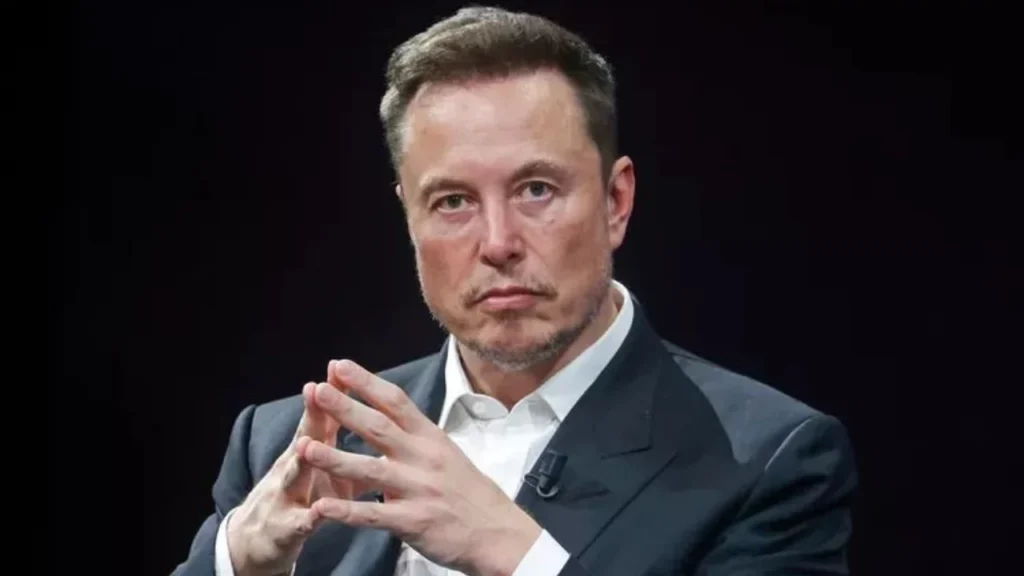
Elon Musk has become one of the most debated and influential entrepreneurs of the modern era, but the defining moments of his career were shaped long before global fame and enormous wealth arrived. In 2008, Elon Musk was weeks away from financial ruin. Tesla had burned through its funding and could not make payroll. SpaceX had failed three consecutive rocket launches. He was borrowing money from friends to cover rent. The pressure surrounding both companies was intense, and many observers believed collapse was inevitable. Investors had begun losing confidence, the financial crisis was spreading across global markets, and Musk’s reputation was increasingly tied to ventures that appeared unstable and unrealistic.
He put his remaining personal capital into both companies simultaneously. SpaceX’s fourth launch succeeded. Tesla closed its funding round on Christmas Eve. Both companies survived. Those events changed not only Musk’s future, but also the direction of the automotive and aerospace industries. If either company had failed at that moment, the modern electric vehicle revolution and private spaceflight industry might have developed very differently. The survival of Tesla and SpaceX during that period revealed one of Musk’s most defining characteristics: an extraordinary willingness to risk everything on ideas most people considered impossible or financially irrational.
That year defines him better than the headlines do. Public discussions about Musk often focus on controversy, social media conflicts, or his unpredictable public statements, but the foundation of his career lies in persistence during periods when success appeared highly unlikely. Most accounts of Musk begin with his South African childhood, his early coding (he sold a video game at age 12), and his arrival in Canada at 17 with almost nothing. Even as a child, Musk displayed unusual curiosity and technical obsession. He spent long hours reading science fiction, engineering books, and computer manuals. Programming became an early passion, and teaching himself software development allowed him to sell a simple game called Blastar while still a teenager.
They trace his path through Queen’s University, the University of Pennsylvania, and a briefly attended Stanford University PhD program he left after two days to start a company during the first commercial internet wave. At the time, the internet was beginning to transform business and communication, and Musk believed the opportunity was too significant to ignore. Leaving Stanford after only two days reflected a pattern that would repeat throughout his career: abandoning conventional paths in favor of high-risk entrepreneurial opportunities.
The company became Zip2, a city guide software business that Compaq acquired in 1999 for 307 million dollars in cash. Musk received 22 million dollars. For most entrepreneurs, that level of success would have represented the endpoint of financial ambition. Instead, Musk treated it as fuel for even larger and riskier ventures. He put 10 million of it into his next venture, X.com, which became PayPal after a merger and was subsequently acquired by eBay for 1.5 billion dollars in stock. The PayPal sale made Musk extremely wealthy while still relatively young, providing him with resources that could have guaranteed permanent financial security.
Rather than diversify, he invested almost everything into SpaceX and Tesla. He has said he thought both companies would probably fail and that he proceeded anyway. That decision separated Musk from many other successful entrepreneurs who choose safer investments after achieving wealth. Instead of protecting his fortune, he concentrated it into industries known for destroying capital. Both aerospace and automobile manufacturing had historically been dominated by massive corporations with enormous infrastructure advantages. Starting new companies in either field was considered almost impossible. Attempting both simultaneously seemed reckless even to experienced investors.
SpaceX became the first private company to dock a spacecraft with the International Space Station, to successfully land and reuse orbital rocket boosters, and to carry NASA astronauts to orbit. The company fundamentally changed the economics of space exploration by dramatically lowering launch costs through reusable rockets. Before SpaceX, most experts believed rocket reusability was impractical or economically unrealistic. Musk pushed engineers to solve problems that traditional aerospace companies had accepted as limitations for decades. The result transformed not only private spaceflight, but also global competition in the aerospace industry.
Tesla became the most valuable car company in the world by market capitalization, having done so without the manufacturing infrastructure or dealer networks that incumbents spent a century building. At a time when many executives dismissed electric vehicles as niche products, Tesla proved that consumers would embrace high-performance electric cars if the technology and design were compelling enough. The company accelerated the global transition toward electric transportation and forced traditional automakers to invest heavily in EV development far earlier than many had planned.
His methods are not universally admired. His management style is demanding in ways that many employees have described as unsustainable. Reports from former employees frequently describe intense expectations, aggressive deadlines, and relentless pressure. Musk is known for involving himself deeply in engineering decisions and expecting extraordinary levels of commitment from teams working under him. Supporters argue that such intensity helped achieve breakthroughs previously considered impossible, while critics contend that the culture often came at significant human cost.
His public behavior, particularly on social media, has alienated investors, customers, and partners. His acquisition of Twitter, rebranded as X, was widely criticized as impulsive and destructively managed. The platform experienced major organizational changes, advertiser concerns, and widespread public debate following the acquisition. Musk’s online presence often amplifies controversy because he communicates directly and unpredictably to millions of followers without the filtering systems most corporate leaders rely upon.
What is less debated is his capacity to concentrate on problems that others have categorized as unsolvable. He is an engineer who reads physics for pleasure and who holds his executives to a standard of technical detail that is unusual at his organizational scale. Musk frequently approaches industries by questioning assumptions that competitors accept as fixed realities. Rather than accepting conventional limitations, he attempts to redesign systems from first principles, a method rooted in physics and engineering logic. This approach has allowed him to challenge industries that many believed were too large, expensive, or established to disrupt.
Whether that makes him the right person to colonize Mars is a question that will take decades to answer. Musk has repeatedly stated that making humanity a multi-planetary species is one of his central long-term goals, and SpaceX’s development programs increasingly reflect that ambition. Whether those plans ultimately succeed remains uncertain. Whether it made him one of the most consequential entrepreneurs of this century is already settled. Few individuals have simultaneously reshaped the automotive industry, private spaceflight, online payments, satellite communications, and artificial intelligence conversations on a global scale. Elon Musk’s career remains controversial, unpredictable, and deeply polarizing, but its impact on technology, business, and industrial innovation is undeniable.